

Disclaimer: This content is for educational purposes only and not medical advice. Always consult your healthcare provider before making dietary changes.
Discover the best low carb sweeteners for keto, baking, and diabetics. Compare top low carb sweetener alternatives like erythritol and stevia, learn their taste, cost, and baking uses, and find the right sugar substitutes to use in your favorite recipes.
Quick Summary:
Erythritol and allulose are the best all-around sweeteners with sugar-like taste and browning ability. Stevia is calorie-free but has an aftertaste, best for drinks.
Xylitol works great but isn't pet-safe. Monk fruit is clean-tasting but more expensive. Use the comparison tables and conversion chart below to find the right sweetener for your recipe.
Summarize and Save this Content on
 add us as a trusted Google source
Jump To:
- Quick Summary:
- What Are Low Carb Sweeteners & Why They Matter
- How to Choose the Right Sweetener for Your Needs
- Top 8 Low Carb Sweeteners Ranked & Compared
- Stevia vs. Erythritol: Which Should You Buy?
- Stevia vs Erythritol Comparison
- Low Carb Sweetener Conversion Chart
- Sugar Conversion Table
- Low carb dessert recipes
- Low Carb Sweeteners to Avoid
- Best Sweeteners for Baking Low Carb Desserts
- Sweetener Side Effects & Digestive Tolerances
- Want monthly low-carb meal plans + exclusive recipes?
- Cost and Taste: Choosing the Right Low Carb Sweetener
- Frequently Asked Questions
- Conclusion
What Are Low Carb Sweeteners & Why They Matter
- Low carb sweeteners are sugar substitutes that contain very few digestible carbohydrates compared with regular sugar. Unlike sugar, which adds significant carbs, low carb sweeteners provide sweetness with minimal impact on recipes' carb content.
- Net carbs refer to the carbs that are digested and absorbed by the body. Most low carb sweeteners have a glycemic index (GI) of 0-20, meaning they contribute very little to total carb counts in a recipe.
- Key Benefit: They allow you to enjoy sweet foods while keeping total carbs low, making them popular in keto and low-carb cooking.
How to Choose the Right Sweetener for Your Needs
Selecting the best low carb sweetener depends on your recipe goals and personal preferences. Before exploring individual options, consider these five key factors:
- Taste Preference: Do you want a sweetener that tastes very similar to sugar, or are you okay with a different aftertaste? Some sweeteners, like stevia, have a distinct flavor, while others, like allulose, are closer to sugar.
- Intended Use: Will you use it for baking, beverages, cooking, or no-bake recipes? Some sweeteners caramelize and brown well, while others work better in cold drinks or sauces.
- Cost and Availability: Check pricing and how easy it is to find the sweetener locally or online. Some blends or rare sweeteners may be more expensive.
- Digestive Tolerance: Certain sugar alcohols, like erythritol, can cause digestive discomfort in larger amounts. Test small batches first.
- Glycemic Impact: While all low carb sweeteners have minimal carbs, some have slightly higher digestible content than others, which may matter for strict keto or low-carb recipes.
Pro Tip: Test one sweetener for 2 weeks before deciding. Your taste buds adapt to new sweeteners, so initial opinions may change.
Top 8 Low Carb Sweeteners Ranked & Compared
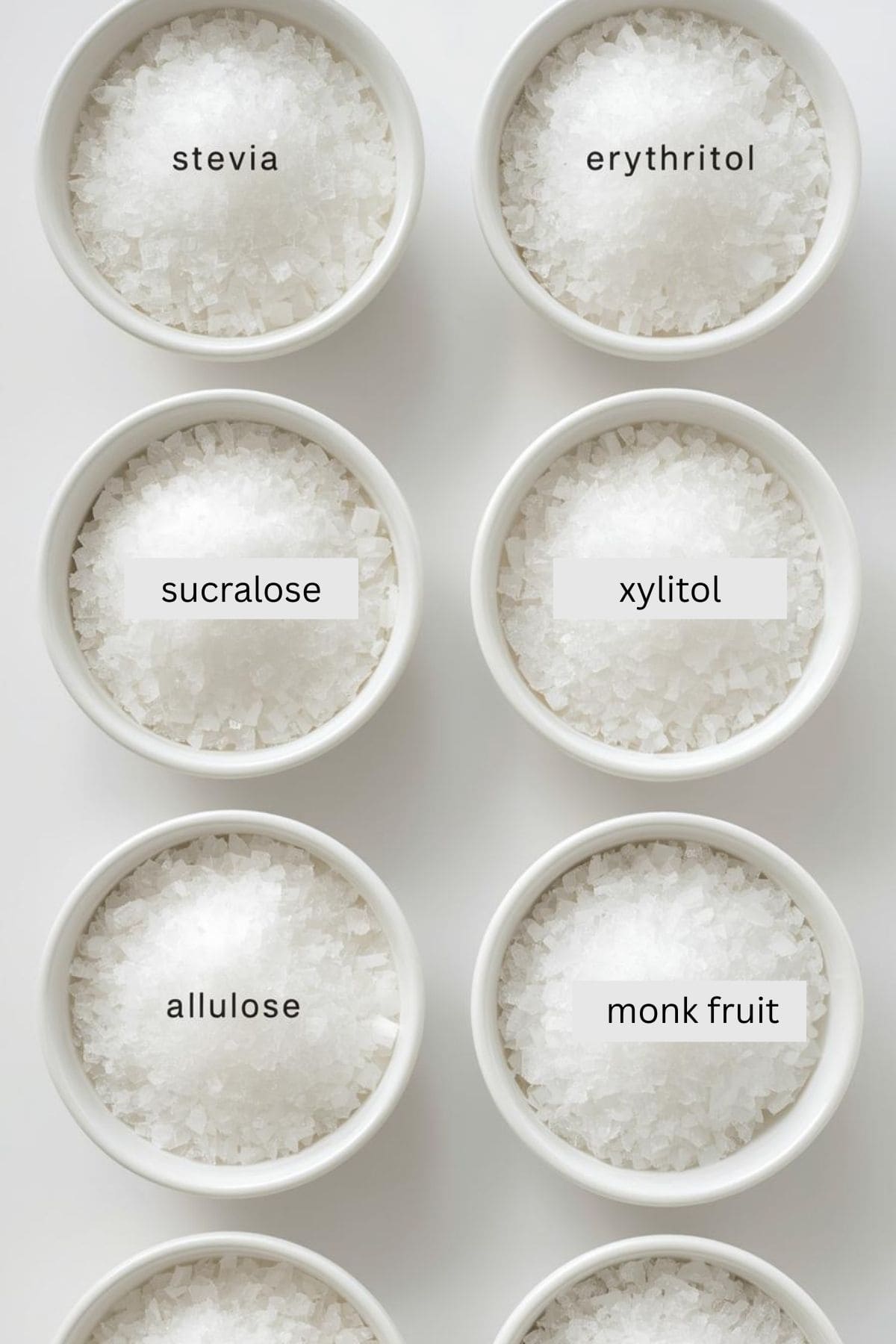
Here's a detailed breakdown of the top low carb sweeteners, including taste, sweetness, carb content, and best uses. This section helps you compare options before deciding which one fits your recipes.
1. Stevia (Natural Extract)
- Origin: Extracted from the leaves of Stevia rebaudiana.
- Carbs & Calories: 0 per serving.
- Sweetness Level: ~200-350× sugar.
- Glycemic Index: 0.
- Taste & Aftertaste: Sweet with a slightly bitter aftertaste for some.
- Best Uses: Cold beverages, yogurt, sauces, low-bake desserts.
- Cost: Moderate.
- Brands: SweetLeaf, NOW Foods.
- Example: Use 1 teaspoon stevia extract for 1 cup sugar in drinks.
- Pros: Zero calories, highly concentrated.
- Cons: Can taste bitter in large amounts; not ideal for browning.
2. Erythritol (Sugar Alcohol)
- Origin: Naturally found in fruits, commercially produced by fermentation.
- Carbs & Calories: 0.24 cal/g, net carbs ~0.
- Sweetness Level: ~70% of sugar.
- Glycemic Index: 0.
- Taste & Aftertaste: Sugar-like; may cause a cooling sensation.
- Best Uses: Baking, beverages, no-bake desserts.
- Cost: Budget-friendly.
- Brands: Swerve, Truvia (erythritol blends).
- Example: Use 1⅓ cups erythritol to replace 1 cup sugar in most recipes.
- Pros: Granular, sugar-like texture; minimal impact on carbs.
- Cons: Can cause mild digestive discomfort in large amounts.
Recent studies have raised questions about erythritol, a common low carb sweetener, with some research linking blood levels to clotting activity. These findings are from lab and observational studies and do not prove cause-and-effect. Regulators still consider erythritol safe, but if you prefer, alternatives like stevia, monk fruit, or allulose can be used.
3. Monk Fruit (Natural Extract)
- Origin: Extracted from the luo han guo fruit.
- Carbs & Calories: 0 per serving.
- Sweetness Level: ~200-300× sugar.
- Glycemic Index: 0.
- Taste & Aftertaste: Sweet, clean taste; mild aftertaste in some products.
- Best Uses: Drinks, baking, sauces.
- Cost: Moderate.
- Brands: Lakanto, Monk Fruit in the Raw.
- Example: Use 1 teaspoon monk fruit extract for 1 cup sugar.
- Pros: Sugar-free, neutral flavor.
- Cons: Often blended with erythritol for baking volume.
4. Allulose (Sugar Alcohol Alternative)
- Origin: Rare sugar naturally in figs, raisins, and maple syrup; produced industrially.
- Carbs & Calories: ~0.2 cal/g, negligible net carbs.
- Sweetness Level: ~70% of sugar.
- Glycemic Index: 0.
- Taste & Aftertaste: Very similar to sugar; no bitter aftertaste.
- Best Uses: Baking, caramel, sauces.
- Cost: Moderate to premium.
- Brands: Wholesome Yum, All-u-Lose.
- Example: Use 1 cup allulose for 1 cup sugar in baked goods.
- Pros: Browns and caramelizes like sugar.
- Cons: Slightly less sweet; may require more for equivalent sweetness.
5. Xylitol (Sugar Alcohol)
- Origin: Sugar alcohol derived from birch or corn.
- Carbs & Calories: 2.4 cal/g, minimal net carbs.
- Sweetness Level: ~1:1 sugar.
- Glycemic Index: Low (~7).
- Taste & Aftertaste: Sugar-like; cool aftertaste.
- Best Uses: Baking, candies, beverages.
- Cost: Moderate.
- Brands: NOW Foods, Xlear.
- Example: Replace 1 cup sugar with 1 cup xylitol.
- Pros: Sugar-like taste and texture.
- Cons: Not safe for pets; excess may cause digestive upset.
6. Sucralose / Splenda (Artifical)
- Origin: Chemically modified from sugar.
- Carbs & Calories: 0 per serving.
- Sweetness Level: ~600× sugar.
- Glycemic Index: 0.
- Taste & Aftertaste: Very sweet; some detect chemical aftertaste.
- Best Uses: Drinks, sauces, cold desserts.
- Cost: Budget-friendly.
- Brands: Splenda.
- Example: Use 1 teaspoon sucralose for 1 cup sugar.
- Pros: Widely available, stable in cold recipes.
- Cons: Not ideal for baking that requires browning.
7. Stevia and Erythritol Blends (Hybrid Products)
- Origin: Combination of stevia extract and erythritol crystals.
- Carbs & Calories: Minimal; net carbs ~0.
- Sweetness Level: 1:1 sugar depending on blend.
- Glycemic Index: 0.
- Taste & Aftertaste: Reduces stevia bitterness; more sugar-like.
- Best Uses: Baking, beverages, no-bake desserts.
- Cost: Moderate.
- Brands: Swerve, Pyure.
- Example: Use 1 cup blend for 1 cup sugar.
- Pros: Combines smooth sweetness with granular texture.
- Cons: Can still have mild cooling effect.
8. Sugar Alcohols to Avoid (Maltitol, Sorbitol)
- Origin: Common sugar alcohols in low-carb packaged foods.
- Carbs & Calories: ~2-3 cal/g, higher net carbs than erythritol.
- Sweetness Level: ~0.5-1× sugar.
- Glycemic Index: Moderate (~35-52).
- Taste & Aftertaste: Often sugar-like but can cause digestive issues.
- Best Uses: Pre-packaged low-carb treats.
- Cost: Low.
- Pros: Widely available.
- Cons: Can spike carb count and cause digestive discomfort.
See sweeteners in action in our No Bake Blueberry Cheesecake Delight and this Sugar Free Lemon Loaf recipe.
For GLP-1 specific sweetener guidance, see our GLP-1 Dessert Recipes with Zero-Carb Sweeteners
Quick Summary
- Best for sugar-like texture: Xylitol, Allulose, Stevia & Erythritol blends
- Best for baking with browning: Allulose, Xylitol
- Best for drinks & cold use: Stevia, Monk Fruit, Sucralose
- Sweeteners to limit/avoid: Maltitol, Sorbitol
Stevia vs. Erythritol: Which Should You Buy?
If you're wondering whether to use stevia or erythritol in your recipes, a side-by-side comparison can make the choice easier. Both are popular low carb sweeteners, but they behave differently in taste, baking, and use.
Stevia vs Erythritol Comparison
| Factor | Stevia | Erythritol |
|---|---|---|
| Taste | Sweet with a licorice-like aftertaste for some | Closer to sugar, slightly cooling sensation |
| Baking Performance | Does not brown; best for cold or no-bake recipes | Breads and cookies brown; works like sugar in baking |
| Cost | Moderate | Slightly cheaper |
| Digestive Impact | Generally well-tolerated in moderation | Generally well-tolerated in moderation |
When to Use Each:
- Stevia: Ideal for drinks, cold desserts, yogurt, and sauces where sweetness without bulk is needed.
- Erythritol: Best for baked goods, granulated recipes, or dishes where sugar-like texture and browning are desired.
Pro Tip: Blend them, 50% stevia and 50% erythritol can eliminate aftertaste and improve baking results.
When blending stevia and erythritol, use powdered stevia extract, not liquid stevia. Liquid stevia works best for beverages and cold recipes.
Low Carb Sweetener Conversion Chart
This low carb sweetener conversion chart gives you quick, reliable swaps so your recipes stay consistent. Bookmark this section. You'll use it often.
Sugar Conversion Table
| Sweetener | 1 cup sugar equals | 1 teaspoon sugar equals |
|---|---|---|
| Erythritol (granular) | 1⅓ cups | 1¼ tsp |
| Allulose | 1 cup | 1 tsp |
| Xylitol | 1 cup | 1 tsp |
| Stevia (pure extract) | 1 tsp | 1/32 tsp |
| Monk fruit (pure extract) | 1 tsp | 1/32 tsp |
| Stevia + erythritol blend | 1 cup | 1 tsp |
| Sucralose (pure) | 1 tsp | 1/32 tsp |
Quick Reference:
• 1 pinch = 1/16 tsp
• ½ pinch = 1/32 tsp
👉 Members: Sign up for our email list and receive the Low Carb Sweetener Conversion Chart PDF for quick kitchen reference.
💡 Tip: Print the Sugar Conversion Table above or download the PDF version for your kitchen!
Common Quantity Conversions
- ½ cup sugar =
- ⅔ cup erythritol
- ½ cup allulose
- ½ cup xylitol
- ½ teaspoon stevia or monk fruit extract
- ¼ cup sugar =
- ⅓ cup erythritol
- ¼ cup allulose
- ¼ cup xylitol
- ¼ teaspoon stevia or monk fruit extract
Important Notes on Accuracy
- Sweetener strength varies by brand and blend ratio.
- Always check the label for "1:1 with sugar" claims.
- Extracts differ widely in concentration. Start low and adjust.
Pro Tip: Use a mini measuring spoon set for small amounts. A pinch equals 1/16 teaspoon for precise sweetening.
Low Carb Sweeteners to Avoid
Not every sweetener fits a low carb approach. Some raise carb counts fast, while others cause issues once you look past the label. This section helps you avoid common traps.
High-Carb Sweeteners That Don't Belong
These behave like sugar and add up quickly:
- Honey, maple syrup, agave, coconut sugar: All are close to regular sugar in carb content and glycemic response.
- Brown sugar, dates: Concentrated sugar with no real advantage for low carb recipes.
- High-fructose corn syrup: Highly refined and common in processed foods.
Sugar Alcohols With Problems
Not all sugar alcohols work well for low carb eating:
- Maltitol: Often labeled low carb, but it significantly raises blood glucose for many people.
- Sorbitol: Higher glycemic impact and commonly linked to digestive upset.
- Xylitol: Sugar-like taste, but toxic to dogs. Not safe in homes with pets.
Best Sweeteners for Baking Low Carb Desserts
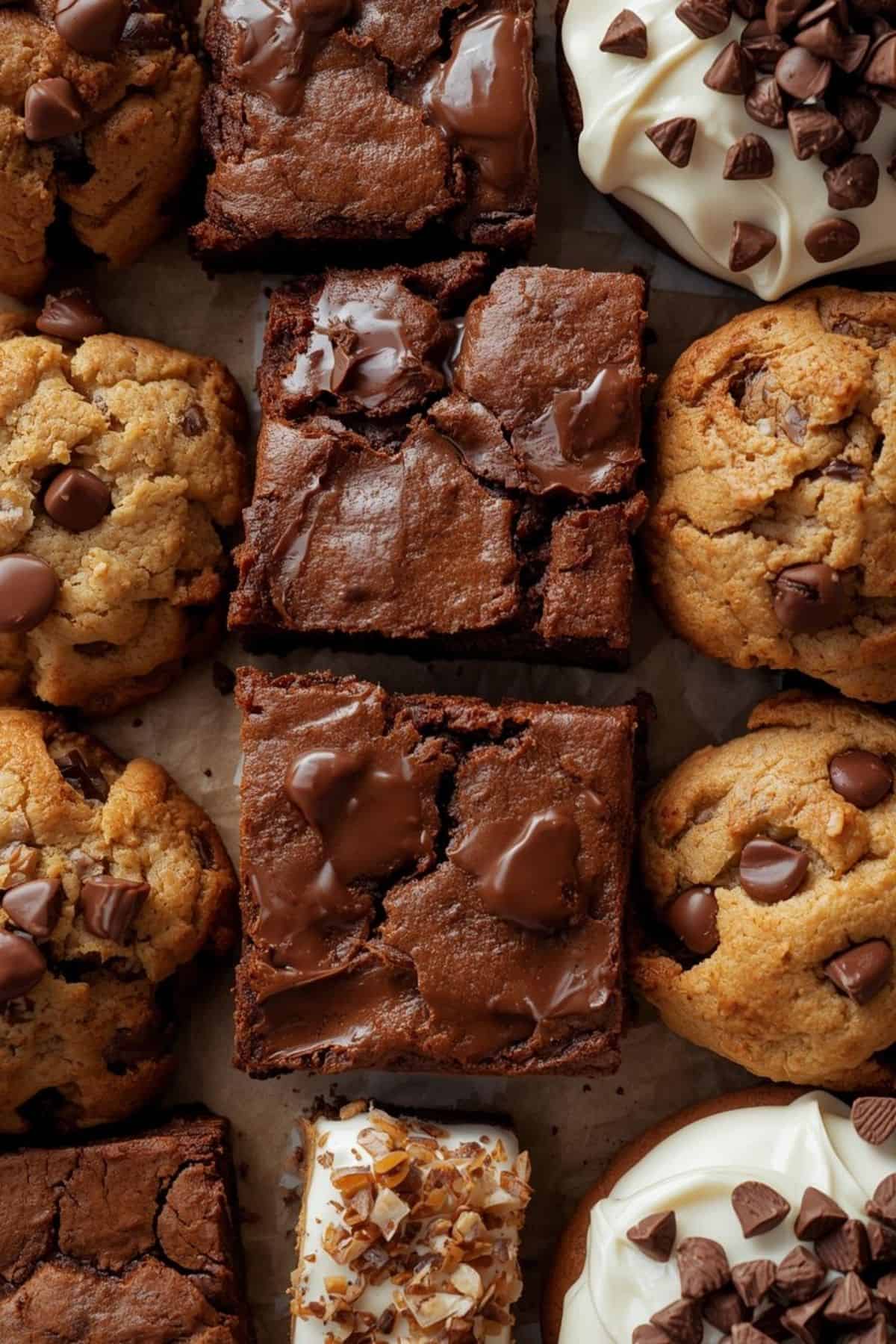
Choosing the right low carb sweeteners for baking matters. The wrong one can leave desserts dry, gritty, or flat.
Best options by baking type:
- Cookies & brownies: Erythritol or allulose. Both hold structure. Allulose gives a softer texture.
- Cakes: Allulose for the most sugar-like crumb. Erythritol blends also work well.
- Candies & caramel: Allulose. It browns and caramelizes.
- No-bake treats: Stevia or monk fruit. No heat required.
- Beverages: Any sweetener works, but liquid stevia is the easiest.
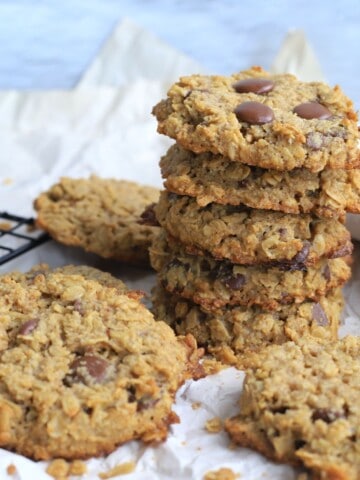
👉 See all my low carb dessert recipes for tested sweetener swaps. This Sugar Free Oatmeal Cookie recipe uses a brown sweetener.
Sweetener Side Effects & Digestive Tolerances
Low carb sweeteners affect people differently. Being aware of common tolerance issues helps you choose what works best for you.
Sugar alcohols and digestion:
- Erythritol: Generally well-tolerated with minimal laxative effect.
- Xylitol: May cause bloating or gas if used in large amounts.
- Maltitol and sorbitol: Commonly linked to digestive discomfort.
Non-sugar alcohol options:
- Stevia and monk fruit: No known digestive issues for most people.
- Artificial sweeteners: Approved for use and widely consumed.
Individual tolerance matters:
Some people react to specific sweeteners even in small amounts, while others don't notice any issues.
Pro Tip: Start with small amounts of any new sweetener and increase slowly to assess your personal tolerance.
Want monthly low-carb meal plans + exclusive recipes?
Join the IHD Inner Circle - your private low-carb recipe club. No ads. No fluff. Just real food that helps you stay on track.
Cost and Taste: Choosing the Right Low Carb Sweetener
Most decisions come down to price, taste, and how you use it.
Cost (low to high):
- Erythritol: cheapest in bulk, about $0.10 per serving
- Stevia: low cost due to high sweetness
- Monk fruit: mid to high cost, around $0.30 per serving
- Allulose: most expensive, best sugar-like taste
Where to buy:
Amazon for bulk and specialty brands. Grocery stores for stevia and blends. Specialty shops for allulose.
Good brands:
Budget: Swerve, NOW Foods
Mid-range: Lakanto, Truvia
Premium: Bochasweet, Pure Monk Fruit
Each sweetener performs differently.
- Closest to sugar: Allulose, monk fruit
- Best for baking: Erythritol, allulose
- Best for coffee: Liquid stevia, monk fruit
- Clean aftertaste: Monk fruit, erythritol blends
Quick notes:
Stevia can taste licorice-like alone. Erythritol has a cooling effect. Allulose tastes best but costs more.
Pro Tip: Keep 2-3 sweeteners on hand. No single option works for every recipe.
Low carb sweeteners are often chosen to reduce sugar intake. Individual response varies, so personal testing matters.

Frequently Asked Questions
Low carb sweeteners are often used because many have a zero or very low glycemic index, meaning they don't behave like regular sugar. Individual response varies, so it's important to test how each sweetener affects you. Always consult your doctor for personal guidance. 👉 See my diabetic-friendly low carb recipes for practical examples.
Some low carb sweeteners taste different due to their chemical structure, stevia, for example, can have a licorice-like aftertaste. You can reduce it by blending with erythritol, choosing monk fruit or erythritol blends, or giving your taste buds a couple of weeks to adapt.
Conclusion
Choosing the right low carb sweetener comes down to your recipe, taste preference, and budget. There's no one-size-fits-all option; what works best for baking may not work for beverages.
Start by testing one or two sweeteners for a couple of weeks. Your taste buds adapt, and you'll quickly discover your favorites. Keep the conversion chart handy, bookmark this post, and don't be afraid to experiment.
Leave a Reply